

Above or Below...
WHICH WAY SHOULD YOU GO?
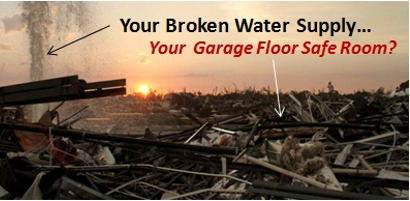
Underground or garage floor shelters are highly succeptable to entrapment when debris covers the door.
During the urgency surrounding most tornadic events, it’s common for inaccurate comments to be made by meteorologists who should know better, such as…” If you’re not underground you won’t survive!“…which is false. Data proves conclusively that safe rooms save lives, period. Anyone who says differently does not understand the safe room design, testing, and verification process. A mountain of data documents the reliability of above-ground safe rooms…if they are certified and verified as FEMA-compliant.
Watch this video from NewsOn6 reporting the performance of the shelters in Moore, OK.
Why We Have Never Offered Below-Ground Safe Rooms
MANY UNINTENDED CONSEQUENCES
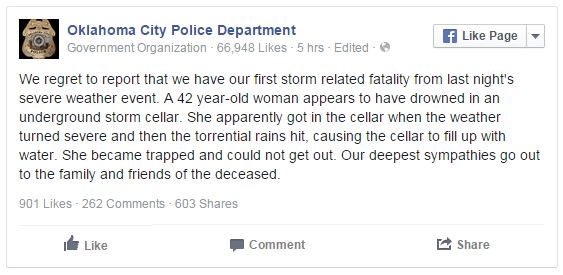
This May 7, 2015 Facebook post from the OKC Police Department documents the main reason we chose not to offer underground shelters in our product line. Maximizing your chances of survival during and after a tornado is our top priority.
There are more hazards to consider with tornado survival than just the tornado itself. See the pictures below.
Our sincere sympathies to the family and friends of the deceased.
SEPARATING FACT FROM FICTION
While there are pros and cons to both types of storm shelters, there are a few misconceptions regarding the relative safety of above-ground safe rooms and storm shelters versus below-ground storm shelters.
At Tornado Alley Armor we address those misconceptions head-on, allowing the homeowner to separate fact from fiction and refine his search for the type that makes the most sense for his situation and budget.
fallacy 1
A tornado will suck a safe room off the slab

Nope, NOT EVEN CLOSE!
Actually, it’s not suction that causes the vast majority of tornado damage. Rather, it is the extreme wind speeds of surface air drawn to the vortex that provide the energy responsible for most tornado damage to buildings, vehicles, and other non-secured structures. If tornado-force winds can get under an object, chances are very likely that the object could go airborne. The actual differential pressure drop (or vacuum if you prefer) is only about 1 psi from normal.
However, with a properly engineered and anchored safe room, the maximum wind force exerted on the outside of a safe room is only a fraction of the hold-down and shear resistance rating of the anchoring system we use. The safe room will remain securely anchored to your slab.
Some may say “I’ve seen roads ripped up”! Yes, but those are blacktop roads where the extreme winds have eroded soil away from the edge. Blacktop is typically thinner and has far less strength than concrete; plus it has no steel reinforcement. Claims of concrete slabs being tossed around are just the raised concrete porches that were popular in the 1940s and 50s.
The real threat then becomes the impact of airborne debris, which poses the greatest threat of injury or death if you’re not adequately shielded from it. Read on…
fallacy 2
Below Ground Shelters are Safer Than Above Ground
There is no data demonstrating that underground shelters provide any significant safety advantage versus above ground safe rooms manufactured by an NSSA-verified Producer Member. As a matter of fact….many underground shelters pose more potential unintended hazards than they have advantages. This illustration demonstrates just some of the hidden hazards found with a typical in-ground garage floor design.
Outdoor below-ground safe rooms force users to venture out into violent weather conditions…driving rain, high winds, hail, and worst of all flying debris…just to reach the shelter. Then they have to open the door in high wind, negotiate the wet steps in pouring rain, and secure the door. REMEMBER: Most injuries and fatalities occur as a result of being hit by flying debris while trying to reach safety!
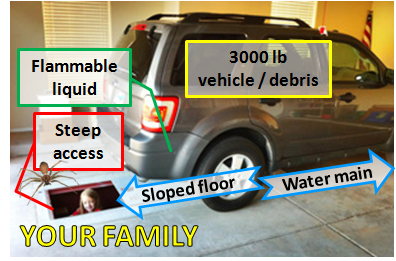
SOME UNINTENDED HAZARDS OF BELOW GROUND SAFE ROOMS
Maybe a good idea in theory…but not so much when you think it through
Here are just a few recent images taken after heavy rains, flooding and fires that often accompany severe weather outbreaks and tornadoes
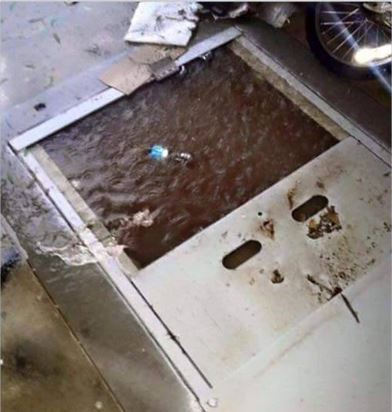
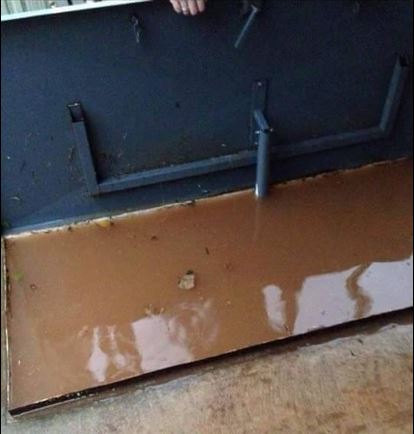
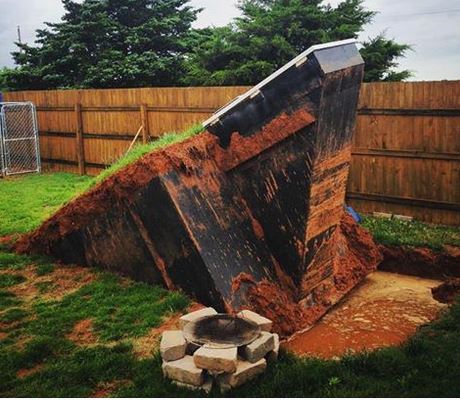
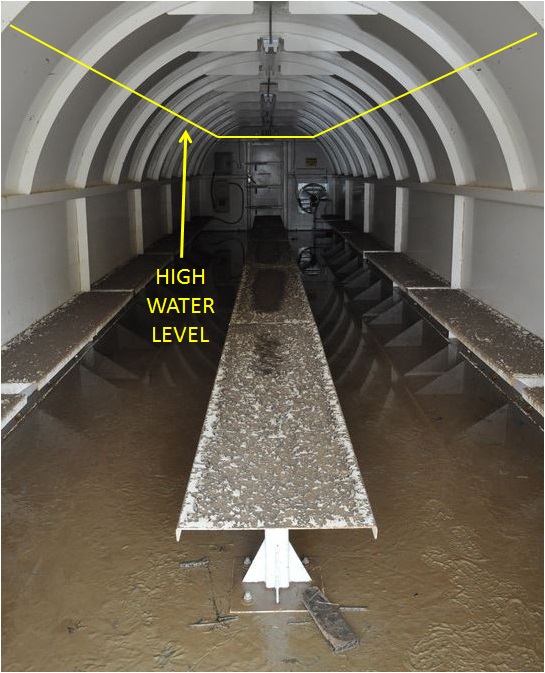
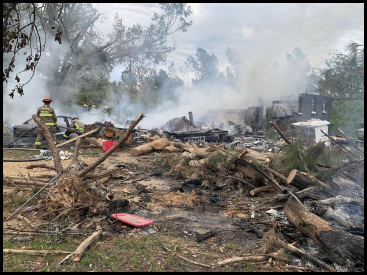
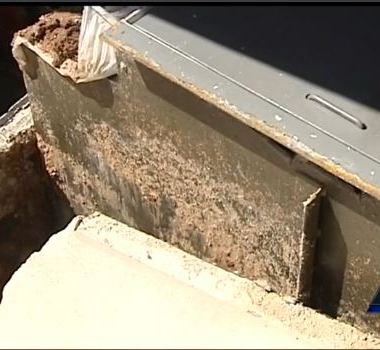
Do not let these documented cases dissuade you from using your underground shelter if you already have one. Just be aware of the potential hazards and have a rapid, fool-proof, and fail-safe contingency plan ready.
Consider the following:
- Less than half of the shelter designs on the market today have been built to meet or exceed FEMA 320 standard for safe room construction, or have been impact tested at the Texas Tech Wind Science and Engineering Research Center in Lubbock, TX. However, many claim to be “certified” with no repurcussions since the industry isn’t regulated by law.
- Above ground safe rooms are subjected to the same test protocols as their underground counterparts, and in fact the number of test impacts on above ground shelters exceeds those of underground models. This is because underground shelters typically have only their doors tested, while above ground units endure additional testing of the walls and corner joints.
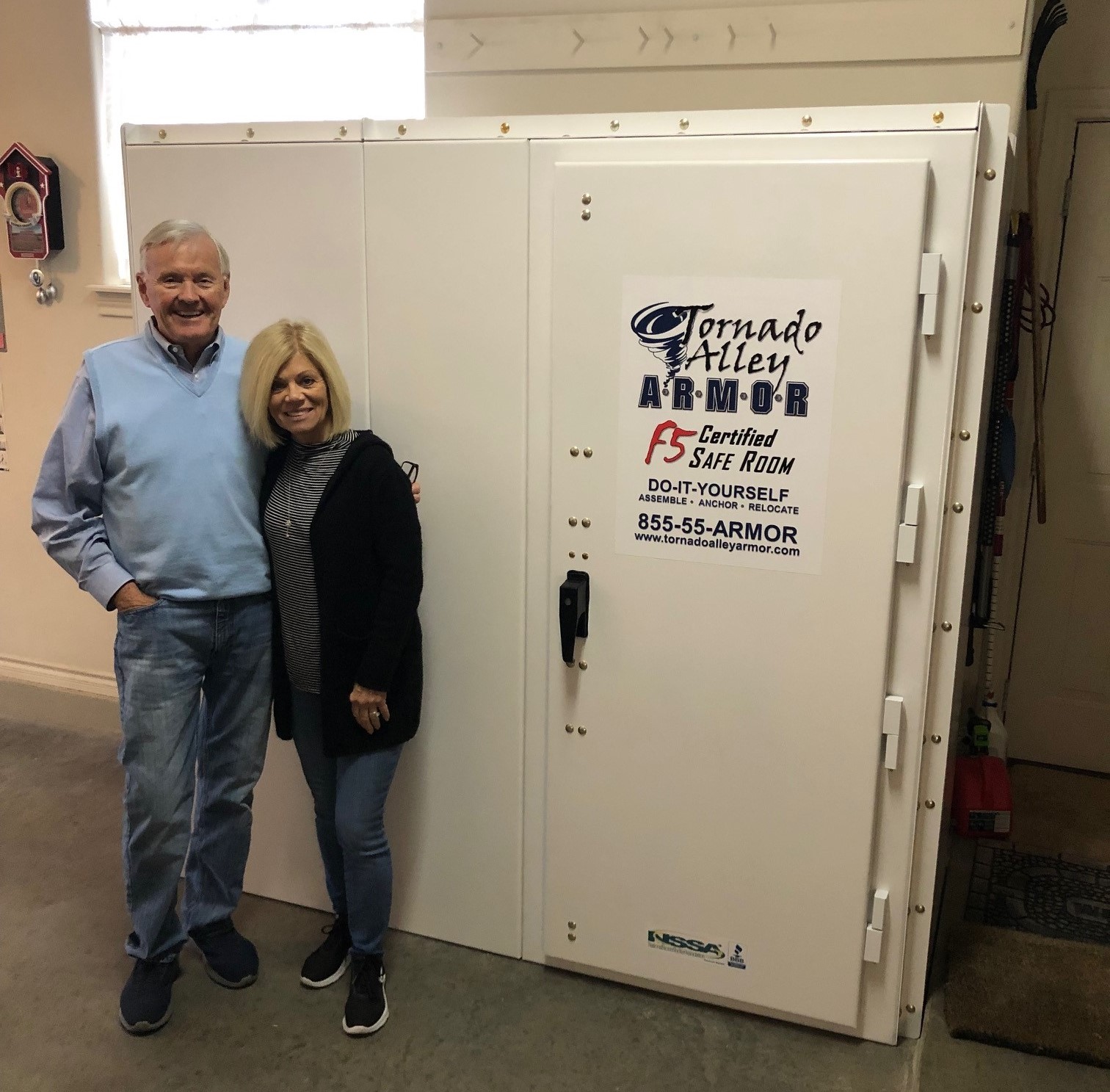
- With that being said, whether it’s above ground or underground, a certified shelter, verified by NSSA as built to withstand EF5 missile impacts will provide its occupants with “near absolute protection (FEMA-320 language). Those that haven’t been independently verified may not. The testing and verification protocols in place establish the ones that will. Manufacturers that haven’t been tested, don’t perform well, fail impact testing, or make excuses why they aren’t NSSA members should be questioned, and they don’t survive long in the marketplace.
- IT COMES DOWN TO NSSA VERIFICATION AND FEATURES. Do your homework. You’ll agree our safe rooms offer so many advantages over any other safe room on the market, we make the decision easy!
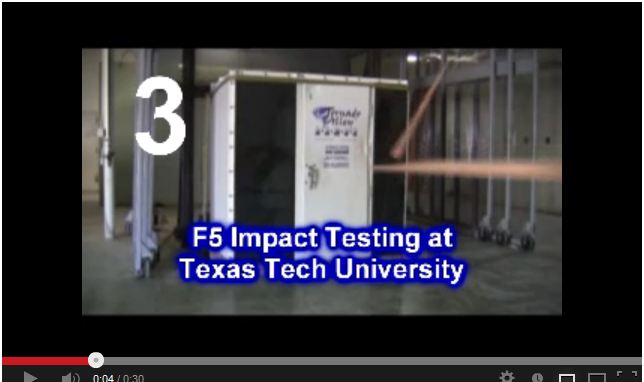
Four Impacts are Required…
SO WE ASKED FOR NINE
Do you want to be impressed with the durability and safety of our above-ground safe rooms? Watch our entire 9-impact test video on our YouTube page condensed to 30 seconds here or by clicking the image below.
fallacy 3
Given a Choice, Underground is Always Best
NOT AT ALL…GET YOUR MONEY’S WORTH
With the safety and anchorage misconceptions clarified, there are many other aspects to consider when selecting a severe weather shelter, with safety being just one aspect. Every application is unique and requires consideration of several factors such as:
- Lifetime Ownership: Can you take it with you if you move? Can you sell it if you choose? Can you give it to your children?
- Space: Is there adequate space available indoors, in your garage, or in your yard? Can the shape of the safe room be altered to accommodate the available space?
- Access to the installation area: Will the equipment needed to perform the installation be able to access the space? Will the size of the prefabricated safe room or shelter preclude it from placement in certain areas?
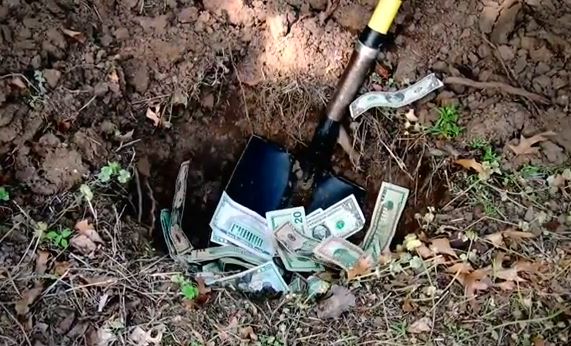
It’s YOUR investment…don’t bury it in the ground just to give it away when you move.
You can’t take a hole in the ground with you!
- Proximity to the living space: How far is it from your living area? Do it require having to venture outside through airborne and potentially deadly debris to reach it?
- Accessibility: Who is going to be using the shelter? Are there children, elderly or mobility-challenged? Are there stairs to navigate?
- Comfort: Do you feel like you’re in a coffin? Can you stand and sit comfortably, or are you curled up in a ball with your knees in your chest? Is there adequate room available for emergency supplies? Could you spend hours inside if forced to do so?
- Emergency egress: What if the shelter door gets blocked or buried with debris? Is there an alternate egress option? Is there more than one way out? Could the door become submerged due to heavy rains or ruptured water lines?
- Long term use: Is the shelter prone to leaking, infestation or corrosion? Will it be left behind if you move to a new home? How difficult or expensive would it be to take it with you?
- Alternate uses: Does the shelter have the flexibility to serve other purposes concurrently, such as a home invasion panic room or a property vault?
…and last, but not least of your considerations….
- Affordability: Has the shelter been over-engineered? Has excessive design and materials selection driven the price unnecessarily high? Is the advertising based on fear or common sense? Are you getting a smart, adequate, approved design, or simply engineering overkill and aggressive marketing to convince you it’s worth the extra cost?
Put Tornado Alley Armor to the test. Ask all the questions and see how we stack up against the other guys. You’ll like what you find.
The easy choice is Tornado Alley Armor Safe Rooms.